
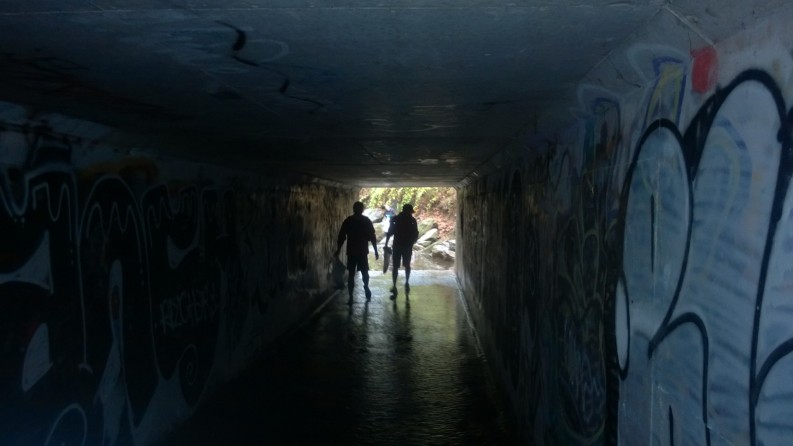
Altamont has participated in stream cleanups with RiverLink for several years. For a November 2015 cleanup, Altamont was assigned a new reach of the unnamed tributary to Reed Creek that parallels Broadway Avenue from Catawba Street to the confluence with Reed Creek at the Asheville Botanical Gardens. In 2013, Altamont designed and oversaw construction of Phase 3 of the Reed Creek Greenway that follows this section of stream.
Altamont volunteers removed and properly disposed of a large volume of trash from the creek. The 12 volunteers included Altamont employees and family members.
“We were happy to be cleaning up the stream alongside a greenway that Altamont was a part of designing and constructing,” says Altamont’s Wyatt Edsel, who helped coordinate the effort. “It was a fun way to give back to the Asheville community—to volunteer and positively impact the rivers and streams our company is passionate about protecting and conserving.”
After the stream cleanup, there was the traditional Altamont form of celebration: pizza! And Wyatt himself celebrated by rafting down Section 9 of the French Broad.

Altamont staff participated in a RiverLink cleanup in November.
“As a company, and equally as expressed by our dedicated staff, all of Altamont values giving back to our community,” says Altamont’s Engineering group lead Chris Gilbert, P.E. “In 2015 that has included two successful river cleanups, as well as a terrific day most of the Altamont staff spent volunteering at a Habitat for Humanity build. Our staff also participates in a wide variety of community organizations, including Engineers Without Borders.”
Established in 1987, RiverLink is a regional nonprofit organization working for the economic and environmental revitalization of the French Broad River and its tributaries. RiverLink describes itself as “providing permanent public access to the river through conservation and recreation easements; reclaiming contaminated lands for public use and enjoyment and greenway development; creating public no-fee, no-reservation overnight camping sites along the river; educating 5,000 students from kindergarten through 12th grade annually, as well as the public at large, about the French Broad River watersheds’ importance; and empowering over 1,700 volunteers each year.”